

Barcelona padel camp for better match play
- Francisco Bover

- 21 hours ago
- 6 min read
Barcelona rewards players who want more from a padel trip than a few hours on court. A Barcelona padel camp can pair focused coaching with the energy of a city where padel is part of the weekly routine, not simply a holiday activity. Train at high-quality clubs, test your game in organised match play, then step into a city known for its beach, food, architecture and late-evening atmosphere.
For ambitious amateurs, that combination matters. You can work seriously on technique and tactics without sacrificing the enjoyment that makes a sports break worth taking. The best camps are built around your current level, your goals and the way you want to experience Barcelona between sessions.
Why Barcelona works for a padel training break
Barcelona has the depth that a proper padel camp needs. There are excellent courts, strong local playing standards and coaches who understand the modern Spanish game: intelligent use of space, patient construction from the back of the court, sharp transitions to the net and better decision-making under pressure.
It is also an easy destination for international travellers. Direct flights from the UK and major European cities, a compact layout and a wide choice of accommodation make short breaks practical. For a three-night escape, the priority may be intensive training and one memorable dinner. For a longer stay, there is room for a more complete programme, including extra match play, recovery time and city experiences.
Barcelona is not the answer for every group, however. Players looking for a quieter, resort-style stay may prefer a coastal destination with more space around the courts. Barcelona is for those who enjoy a lively city base and want their padel to sit alongside culture, restaurants and a real sense of place.
What a Barcelona padel camp should include
A premium camp should feel personal from the first session, not like a generic clinic with a large group sharing one coach. The right format depends on whether you are travelling alone, with a partner, with friends or as a corporate group, but the foundation is the same: quality coaching, carefully selected venues and a schedule that lets you improve without burning out.
Coaching that addresses your actual game
The strongest sessions begin with observation. Before adding new drills, a coach should identify where points are being lost. For intermediate players, that may be unreliable lobs, rushed volleys or poor positioning after the return. Advanced players may need more detail around defending the bandeja, building pressure through the middle, reading opponents’ body shape or choosing the right moment to attack.
Private and small-group training offer different advantages. Private lessons move quickly and can be tailored closely to your technique and tactical habits. A small group creates more varied situations, competitive energy and useful feedback from match-based drills. Neither is automatically better. A couple travelling together may benefit from a mix of both: private technical work early in the camp, then coached match play to put it into practice.
English-speaking coaching is especially valuable when the aim is tactical improvement. Padel decisions often happen in seconds. Clear explanations, simple cues and immediate correction help you understand not just what to do, but why it works.
Match play with a purpose
Lessons alone do not guarantee better results when the score starts. A well-designed camp creates a bridge between practice and competition through supervised points, structured games and matches against suitable players.
This is where Barcelona’s local padel culture adds real value. Playing with or against strong local players exposes habits that are difficult to replicate at home: higher-quality lobs, more disciplined net positioning and better use of the glass. It can be challenging at first, but it gives your coach meaningful material to work with in the next session.
Ask for match play that has an objective. One day might focus on holding the net after serving. Another might be about reducing unforced errors from the back of the court, or communicating clearly when both players are under pressure. A match becomes much more useful when you leave with one or two decisions to repeat, rather than a vague sense that you need to play better.
A schedule that leaves room to enjoy the city
More court time is not always more progress. Two demanding sessions in one day can work well for fit, experienced players on a short trip, particularly when technical training is followed by lighter tactical play. But if every day is packed with high-intensity padel, concentration drops and small injuries become more likely.
For most players, a balanced programme combines morning or late-afternoon coaching with free time in the middle of the day. That leaves space to explore neighbourhoods, visit the beach, recover properly or simply enjoy a long lunch. Barcelona is at its best when the trip has rhythm: train with purpose, reset, then return to court ready to compete.
Choosing the right camp format
The best format should fit your travel party and playing ambitions, rather than forcing you into a fixed plan.
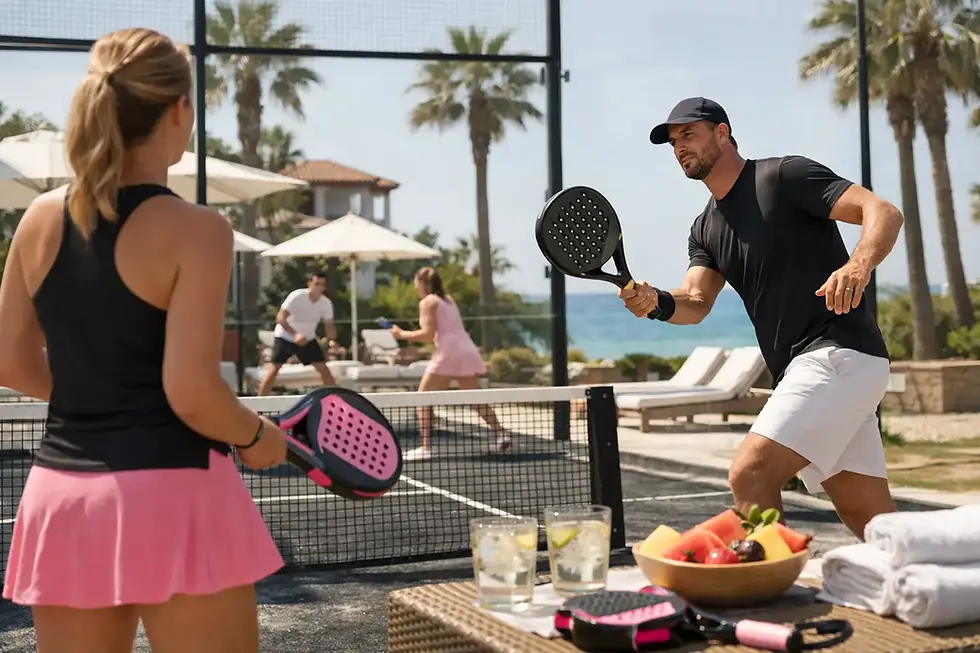
A private padel experience suits solo travellers, couples and small groups who want complete flexibility. You can decide the number of sessions, the coaching focus and the pace of each day. It is particularly effective for players preparing for a tournament or aiming to make a clear technical change.
A scheduled group camp brings a social side to the experience. You will train alongside players with similar goals, share the competitive moments and often leave with new padel contacts. Group camps work well for those who enjoy a structured programme and do not want to arrange a playing network themselves.
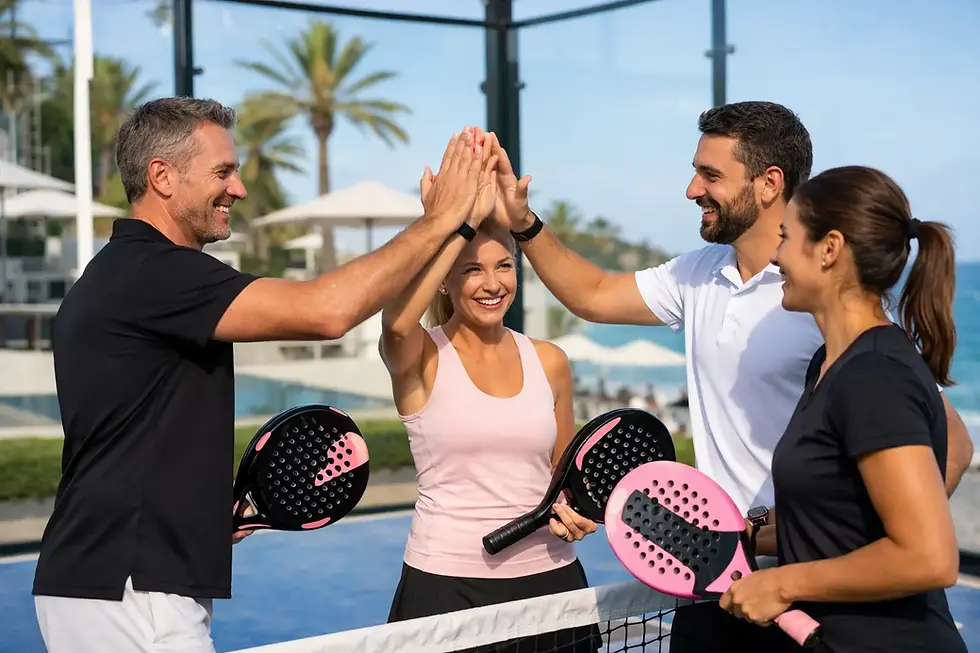
For friends travelling together, a bespoke package is often the strongest choice. The group can train as a unit, split into ability-appropriate coaching groups when needed, and enjoy matched games that stay competitive. Corporate teams can also use padel exceptionally well: it rewards communication, composure and partnership, while keeping the atmosphere active and enjoyable rather than overly formal.
Spain Padel Experiences can shape each of these formats around elite coaching, trusted club access, accommodation preferences and local arrangements, with support available throughout the trip. The aim is simple: less time coordinating logistics and more time focused on your game.
How many days do you need?
A long weekend can create a genuine boost, especially if you arrive with one clear objective. Three or four coaching sessions, combined with match play, are enough to identify patterns and establish new habits. This is ideal for players who want a premium sporting break without taking a full week away.
A five- to seven-day camp allows more depth. There is time to assess your starting point, build technical confidence, apply it in tactical drills and then test it in match situations. It also gives the body time to adapt. Changes to volley preparation, overhead technique or movement can feel awkward initially; a longer programme lets those changes settle before you return home.
If you are part of an established pair, consider training together for at least part of the camp. Padel is a partnership game. Better movement and shot selection matter, but so do shared patterns: who takes the middle ball, when to switch, how to defend the wire and where to place the return to create a favourable next shot.
Getting more from every session
Arrive with a goal, but keep it realistic. “Improve my game” is understandable, yet it is too broad to guide a coach. “Become more reliable under the lob”, “stop giving away the net after my return” or “improve communication with my partner” gives your training a useful direction.
Bring the footwear you trust, hydrate well and allow for recovery between sessions. Barcelona’s climate can make outdoor play feel more demanding than expected, particularly in warmer months. Your coach may recommend an indoor or covered setting depending on conditions, timing and the club selected.
Most importantly, be willing to play differently for a few days. Spanish coaching may ask you to slow the point down, defend with more height or resist attacking too early. That can feel less dramatic than trying for winners, yet it is often the route to more controlled, higher-percentage padel.
Book a Barcelona camp with enough space in the itinerary to notice the details: the better lob, the calmer volley, the conversation with your partner before the next point. Those are the improvements that travel home with you.

Comments