
Padel Camp vs Private Lessons: Which Is Best?
- Francisco Bover

- Jul 30
- 6 min read
You have four days in Spain, a serious appetite to improve and the rare luxury of putting padel at the centre of your holiday. The question is not simply where to play. It is whether a padel camp vs private lessons will give you the sharper game, the better trip and the experience you will remember once you are back home.
Both formats can transform your padel, particularly when they are built around experienced Spanish coaches and high-quality clubs. The right choice depends on how you learn, who you are travelling with and whether your ideal break is intensely personal, gloriously social or a blend of both.
Padel camp vs private lessons: the real difference
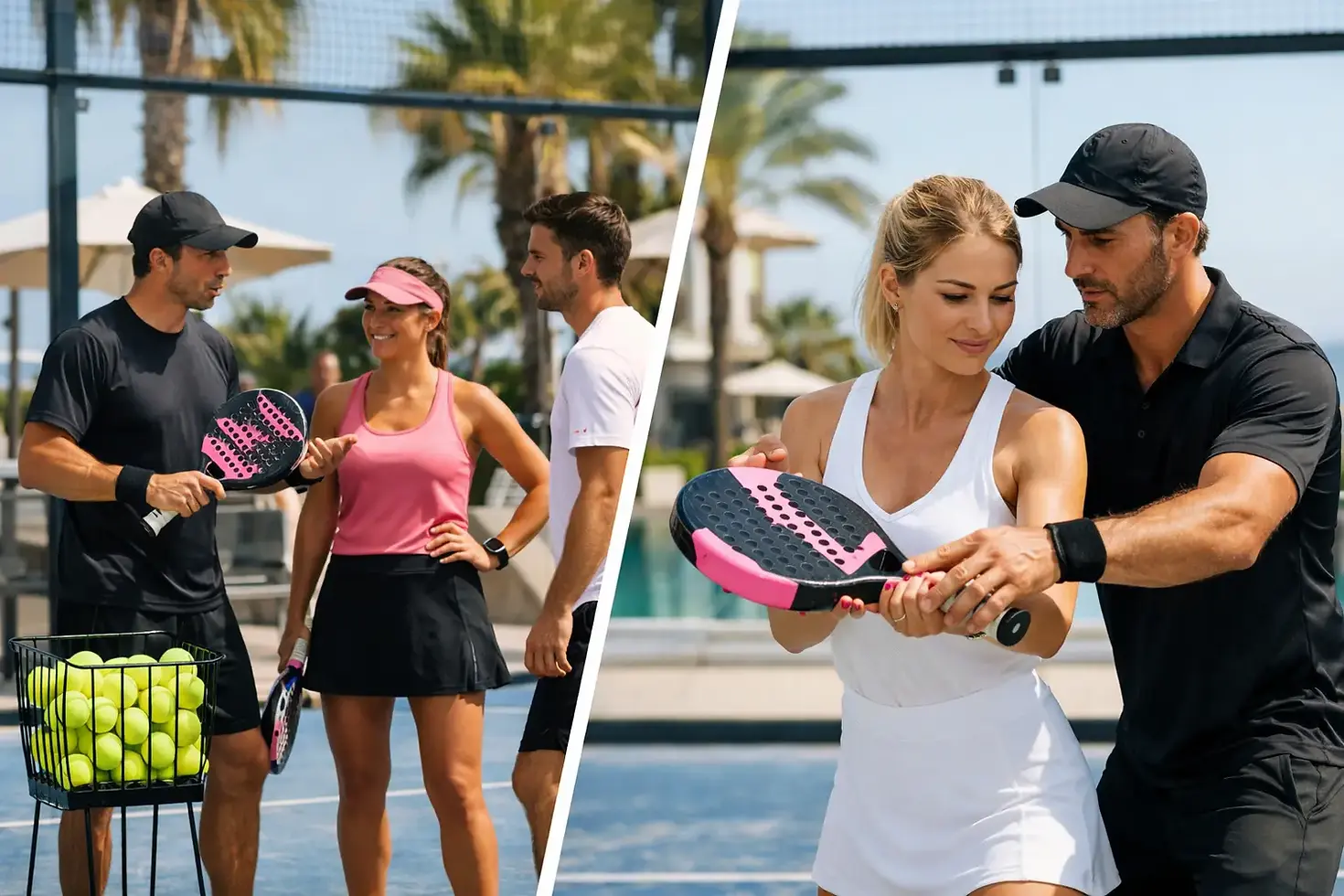
A padel camp is a structured, multi-day programme shared with other players. Sessions often combine technical coaching, tactical exercises, match play and time to get to know fellow guests. It creates momentum quickly: you train, play, reflect and return to court the next day with a clearer purpose.
Private lessons are designed around you. Your coach can spend the whole session diagnosing the reason your bandeja sits up, rebuilding your volley position or giving you a more confident plan for defending the glass. The timetable, pace and priorities are yours to shape.
Neither format is automatically better. Camps create variety, energy and a powerful group dynamic. Private coaching provides precision, flexibility and a faster route to solving a particular problem. For a premium padel holiday, the strongest decision starts with your goal rather than the label on the package.
Choose a padel camp when you want momentum and company
A camp suits players who enjoy learning alongside others and want padel to be the social heart of their trip. You may arrive with a friend, partner or small group, but the shared sessions and matches naturally broaden the experience. That is especially valuable for solo travellers who want quality court time without needing to organise opponents at an unfamiliar destination.
The group setting also brings situations that are difficult to recreate in a one-to-one lesson. You will see different playing styles, partner with players of varied strengths and test your decisions under changing match conditions. A coach can lead a tactical theme, such as holding the net, serving with intention or choosing the right ball after the rebound, then let the group put it into action immediately.
For many intermediate players, this cycle is highly effective. A morning drill becomes an afternoon match habit; an explanation from the coach becomes a conversation over lunch with people who are working on the same challenge. There is a special motivation in returning to court with a group that is equally invested in improving.
Camps work best when the group level is well matched. If you are an established intermediate player placed with complete beginners, you may not get the intensity you expected. Equally, newer players can feel rushed if the pace is set by advanced competitors. Ask how playing standards are assessed, whether groups are kept small and how coaches adapt sessions when abilities vary.
A camp is also a natural choice for corporate groups. Training and friendly competition give colleagues a shared focus, while Spain’s exceptional clubs, local food and destination atmosphere make the time away feel far more memorable than a conventional team event.
Choose private lessons when every detail matters
Private training gives you the coach’s full attention. This is the format to choose if you have a precise ambition: preparing for a club competition, learning to play the right side, developing a more reliable overhead or moving beyond the plateau that has followed you for months.
A skilled coach does more than feed balls. They watch your starting position, grip changes, shot selection, movement with your partner and reactions under pressure. They can then adjust the next exercise on the spot. That level of feedback is difficult to match in a group, even a small one.
It is particularly valuable if you are short on time. A two-hour private session can focus entirely on the parts of your game most likely to deliver an immediate gain. You might work on turning defence into attack from the back of the court, then finish with targeted points that force you to make the new decision at match speed.
Private lessons are also easier to fit around a tailored travel itinerary. Perhaps you want an early session before exploring Barcelona, a late-afternoon court in Marbella after a day by the coast, or a programme that leaves space for a family holiday in Mallorca. With private training, your padel schedule supports the trip rather than dictating it.
There is one trade-off. Individual coaching can be demanding, both physically and mentally. You will have fewer natural breaks and nowhere to hide from a coach who has spotted the habit you would rather ignore. It is exactly why the format works, but it is worth planning recovery time, particularly if you book consecutive sessions.
Your level should influence the decision
Beginners often benefit from a private lesson at the start of their trip. Establishing the basics - court positioning, safe contact, the use of the walls and how to play with a partner - gives them confidence before group play. A beginner-friendly camp can still be a brilliant introduction, provided the coaching is patient and the programme does not assume prior experience.
Intermediate players usually have the widest choice. If your main aim is to play more, meet like-minded people and develop match awareness, a camp provides outstanding value. If one or two weaknesses repeatedly decide your matches, private coaching can deliver a more direct breakthrough.
Advanced players should look closely at coaching quality and court intensity rather than choosing by format alone. They need detailed tactical work, demanding drills and partners who can sustain a high tempo. A small, level-appropriate camp can provide excellent competitive variety, while private sessions are ideal for refining technical details and building a tournament plan.
Consider the trip you actually want to have
The training format affects more than your forehand. It shapes the rhythm of the whole holiday.
Choose a camp if you want a ready-made padel community, a clear multi-day structure and plenty of match play. It removes the effort of arranging courts, coaches and compatible players yourself. You arrive ready to train, with the reassurance that the important details have been considered.
Choose private lessons if you value freedom. You can train hard for two mornings, add a match session with your travelling companion, then leave an afternoon open for a winery visit, a beach club or a long lunch in the old town. This format is often ideal for couples or friends whose enthusiasm for padel is not perfectly matched.
Destination matters too. A city break in Valencia or Sevilla may suit concentrated private sessions around sightseeing. Marbella, Malaga and Alicante lend themselves beautifully to longer camp-style stays, where sport, sunshine and social evenings form the natural rhythm of the week. There are no fixed rules, but matching the training style to the destination makes the experience feel considered rather than crammed in.
The strongest option is often a combination
You do not have to treat padel camp vs private lessons as an either-or decision. A blended programme can offer the best balance for ambitious players. Start with a private assessment session so your coach understands your game and gives you clear priorities. Then join group drills and match play to test those priorities against different opponents and partners.
This approach is particularly effective for pairs. One private session can address how you communicate, cover the middle and choose who takes the overhead. Group match play then exposes the pair to new patterns and pressure, without making every hour of the trip feel like an examination.
At Spain Padel Experiences, programmes can be shaped around this balance, combining elite coaching, handpicked clubs and the practical support that makes a training holiday feel effortless from the moment you arrive. The result is not merely more court time. It is a padel trip with a clear purpose and room to enjoy Spain properly.
Questions to ask before you book
Before committing, ask how many players will be on court, whether your coach speaks English, how levels are grouped and how much match play is included. Find out whether sessions can be adapted for injuries, whether equipment is available and what happens if weather affects outdoor plans.
Also be honest about your energy. Four hours of padel a day sounds irresistible when you are booking from the UK in January. In the Spanish sun, with travel and evening plans included, a thoughtfully paced schedule may deliver more improvement than an overfilled one. Quality coaching, recovery and purposeful match play will beat exhaustion every time.
If you are travelling with non-playing companions, check how easily the programme can flex around shared plans. Premium padel travel should never force you to choose between a better game and a great holiday.
The best programme is the one that leaves you returning home with clearer tactics, happier memories and a genuine eagerness for your next match. Choose the format that gives your padel the attention it deserves, then let Spain provide the setting that makes the work feel like a reward.

Comments